
By Dr. Harvey Chidoba Banda
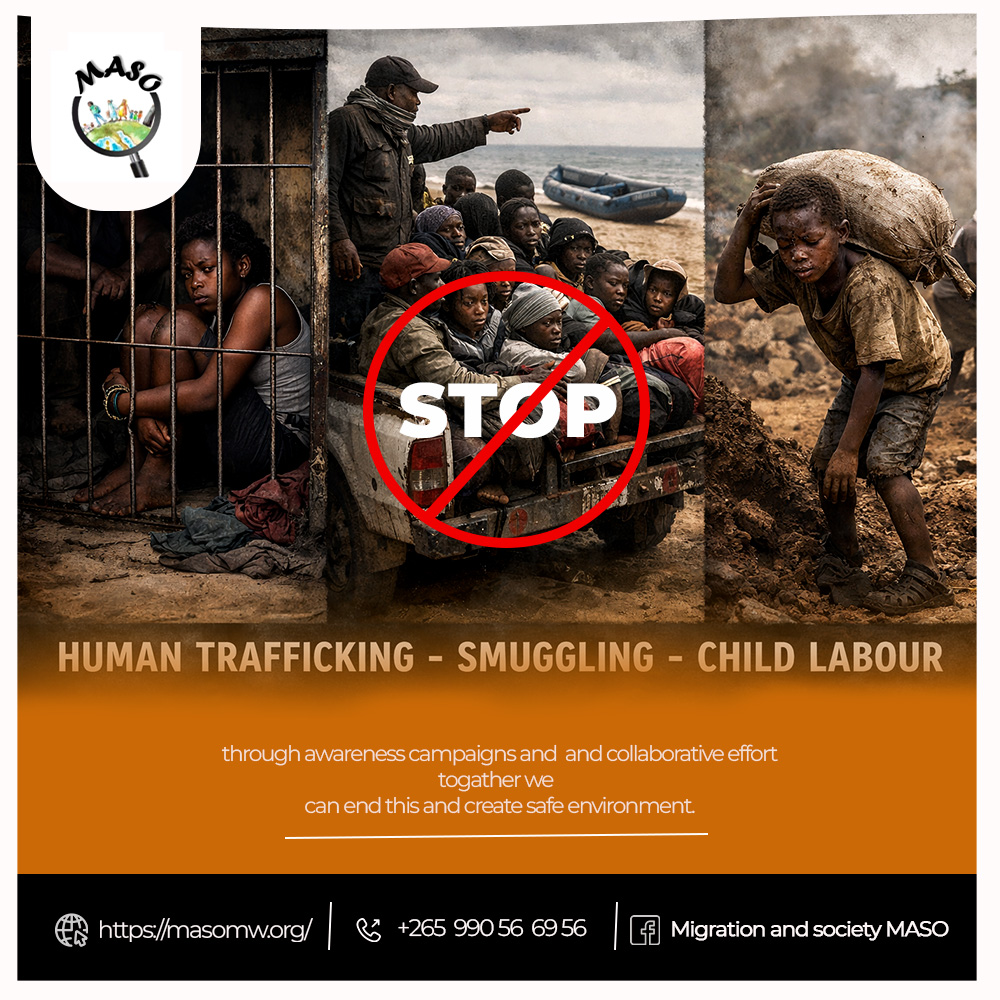
Cross-border migration from the two border districts of Chitipa and Karonga is a deep-seated and long-term phenomenon: it has been occurring for many decades. While the people from Karonga have largely been destined to Tanzania, the case of Chitipa offers an interesting parallel and comparative dimension. The people in this district would either emigrate to Zambia, especially to the copper mines, or to Tanzania, where they worked in various sectors including agriculture.
In this article, I unearth a new migration phenomenon, especially from Chitipa District. I advance the argument that the ailing economy in Malawi is behind the economic pinch and, as a result of lack of viable income-earning opportunities, people in these two districts are compelled to eke out their living by emigrating and working abroad. This presents a favourable atmosphere which is pounced upon by unscrupulous human traffickers and human smugglers.
The interest to unearth developments surrounding human trafficking, smuggling and child labour in Chitipa and the neighbouring Karonga District follows a news article in November 2025 about the disappearance of young men and women from parts of the northern region, particularly from northern Mzimba District. It was alleged that these young people leave their homes without trace and knowledge of their parents. After searching in vain, it was learnt that they are usually engaged to work in Tanzania by unscrupulous recruiters and these include traffickers and smugglers.
Following this development, Migration and Society (MASO), a local organisation based in Mzuzu City, northern Malawi, embarked on a fact-finding mission to get to the root of this phenomenon. In the process, MASO learnt that the people from Chitipa have been clandestinely going to Tanzania for various reasons including to work in open cast mining in Chunya area in southern Tanzania. Migration between the two regions has been, and still remains, clandestine.
One of the interesting aspects about this form of migration is the question: why are people emigrating from Chitipa to Tanzania and not to Zambia, as was the case in the olden days, for instance, in the 1940s through to the 1970s? From the information collected, MASO has learnt that migration to the copper mines used to be vibrant in those years, but this migration died down following the plummeting of copper prices on the international market.
Contrariwise, the faltering of Malawi’s economy brought about a scenario where it is lucrative for a Malawian to emigrate and work in Tanzania. The Tanzanian Shilling is stronger than the Malawi Kwacha. Hence Malawian migrant workers, for instance, those who do piece jobs (maganyu) earn more Shillings (Tanzanian currency) than their counterparts back home (Malawi Kwacha).
It has been uncovered that child labour is involved in this malpractice since some of the young men and women recruited to work in Tanzania are below the adult age of eighteen years. Consequently, there are three categories of people who are involved in this practice: child labour recruiters; human smugglers and human traffickers. These young men and women are promised to be given jobs in rather descent work places, for instance, they go there to work in farms, and are involved in brick making during the dry season. As for ladies, they are promised domestic work and yet, upon arrival, are abandoned and end up in prostitution.
It is worth noting that most young men are destined to work in illegal mines in Tanzania and this is an old practice. As part of this practice, there is a language in Chitipa known as Mbibwe, which has an element of malibwe (meaning kumalibwe, that is, ’where they work with rocks’, referring to this area in Tanzania). Specifically, Malawians go to Chunya, a local town where these mines are located. It is sad to learn that the recuitment process by these traffickers and smugglers involves masalamusi or masenga, that is, use of bad charms to ensure these recruits are mentally disturbed so that they are not able to think about returning to their homes in Malawi.
In terms of impact, child labour and the recuitment of young men and women have a deleterious effect on education attainment amongst children in the border sistricts, but also in the landlocked districts such as Mzimba in northern Malawi. Based on the foregoing, Migration and Society (MASO) is interested to work with like-mided organisations in order to root out the malpractice.
Dr. Harvey Chidoba Banda is Executive Director of Migration and Society (MASO)